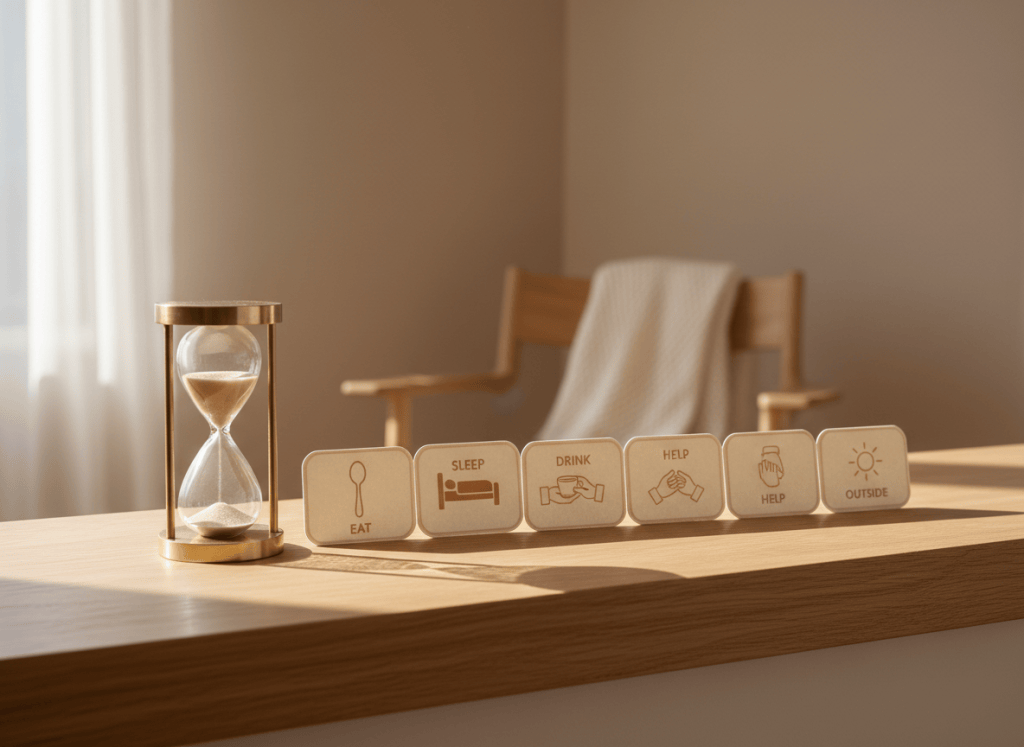
Understanding processing time and creating space for autistic children to respond.
Communication is not only about what we say. It is also about the time we give another person to process, organize, and respond.
Sometimes, after asking an autistic child a question or giving an instruction, adults may repeat themselves almost immediately:
“Put your shoes on.”
“Shoes on.”
“Come on, put your shoes on.”
We may think the child did not hear us or does not understand. But sometimes, the child may simply still be processing the first message.
Processing Takes Time
Processing spoken language involves several steps.
A child may need to notice that someone is speaking, understand the words, work out what they mean, decide how to respond, and then organize a verbal or physical response.
For some autistic children, this process may take more time, especially when the environment is busy, the language is complex, or the child is already managing sensory and emotional demands.
When another instruction arrives before the first one has been processed, it can add more information to an already demanding task.
What Happens When We Wait?
A short pause can change the interaction.
Instead of immediately repeating a question or instruction, try giving your child a few quiet seconds.
Watch what happens.
You may notice a glance, a movement, a gesture, a word, or the beginning of an action that might have been missed if another instruction had come too quickly.
The pause is not about testing the child.
It is about creating space for a response.
Why Three Seconds?
Three seconds is not a rule, and every child is different.
For some children, three seconds may be enough. Others may need five, ten, or even longer depending on the situation.
The important idea is not the exact number.
It is the habit of asking, pausing, observing, and allowing time before prompting again.
Over time, parents and caregivers can begin to recognize their child’s individual processing rhythm.
Try This in Everyday Life
The next time you ask your child something:
Say it once.
Then wait.
Resist the urge to immediately repeat, rephrase, or add another instruction.
Watch your child carefully. A response may begin before words appear—a shift in attention, a look toward an object, a gesture, or movement toward what you asked.
If more support is needed, you can then simplify the language, add a visual cue, or provide another form of support.
Communication Needs Space
Sometimes supporting communication is not about adding more words.
Sometimes it means using fewer words and giving the child more time.
A few quiet seconds can communicate something important too:
“I’m here. I’m listening. You have time to respond.”
Dr. Lita | A Rainbow Raising
Research-informed insights on autism communication, parenting, and everyday connection.


Leave a comment