Communication Begins Before Words
Before a child learns to use more words, communication often begins with something much simpler: sharing attention with another person.
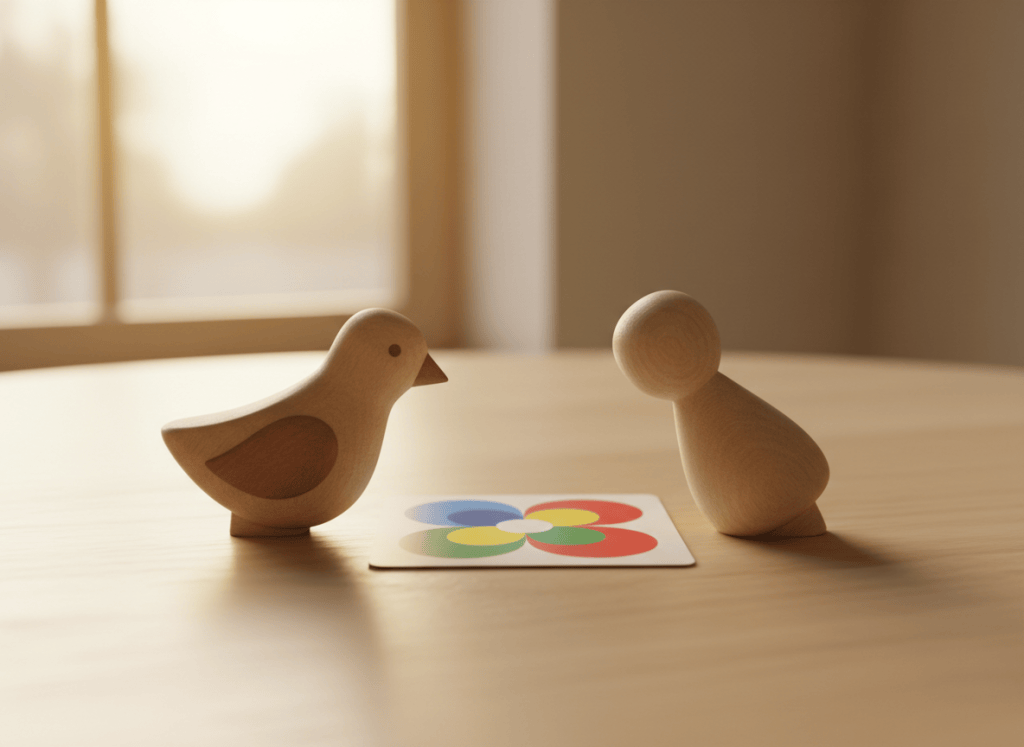
Joint attention is the ability to share focus on the same object, event, or experience with someone else. For example, a child may look at a toy and then look toward a parent as if to say, “Did you see that too?” Or a parent may point to something interesting, and the child follows the gesture.
Why Joint Attention Matters
Joint attention plays an important role in early communication and social learning. Through shared attention, children begin to connect people, objects, gestures, sounds, and eventually words.
For autistic children, joint attention may develop or appear differently. A child may communicate interest without using typical eye contact, or may need more time to shift attention between an object and another person.
The goal is not to force a child to communicate in a particular way, but to notice and build on the ways they already connect with us.
Supporting Joint Attention at Home
Everyday interactions can create opportunities for shared attention.
Follow your child’s interests rather than always directing their play. Join what they are already doing, comment on what captures their attention, point out interesting things, and give them time to respond.
Sometimes the most useful thing a parent can do is simply wait.
A small pause can give a child the processing time they need to notice, respond, or invite us into their experience.
A Small Moment Can Be Communication
Joint attention does not have to look perfect.
A glance, a gesture, bringing an object to you, shifting attention, or sharing excitement can all become meaningful moments of connection.
When we learn to notice these small moments, communication becomes less about asking a child to perform and more about building connection together.
Dr. Lita | A Rainbow Raising
Research-informed insights on autism communication, parenting, and everyday connection.


Leave a comment